
PRIME TELFA / OYSTERNUT
The “Oysternuts”, also known as “oil vine” is a liana of around 30 metres long that climbs up around trees and grows perfectly in the agroforests of our farmers in the Central East and East of Uganda.
The crop is a climate resistant plant that does not need extra land, fertilisers, pesticides or intensive labour. The seeds have a tough shell (like an oyster) and the seeds grow in pots.
By bringing oysternuts to new markets, Fiber Foods is helping to unlock the
potential of this crop while creating new opportunities for Ugandan farming communities.
Currently we are planting and training smallholder farmers in two regions in Uganda In partnership with Amref Health Africa and RVO through the SPVO (previously SSF Fund)


Naturally nutritious & traditionally valued
Oysternuts (Telfairia pedata) are one of East Africa's traditional crops, valued for generations and now being rediscovered for their exceptional nutritional profile. Naturally rich in plant protein, healthy oils, vitamin E and essential minerals, they are a wholesome ingredient that fits perfectly into a balanced diet.
How to start growing oysternut
Oyster nut is delicious, nutritious, and useful in everyday cooking. It can help families add protein, fiber, and energy to their meals. When harvests are larger than what a household can eat, oyster nuts can also be sold as an additional source of income.

Tie a male and female seed
together with a banana leaf.
A male and female seed are tied together with a banana leaf and planted near a strong tree. The tree gives the vine the support it needs as it grows.

Female flowers become pods.
Oyster nut starts with careful planting. A male and female seed are tied together with a banana leaf and planted near a strong tree. The tree gives the vine the support it needs as it grows.

Dig a hole near a strong,
non fruit bearing tree.
Young oyster nut plants need protection while they are still small. Farmers should protect the seedling from animals and check regularly that the protection is still in place.


The pod grows and ripens
Female flowers can develop into large pods. One pod can contain more than 125 seeds. When the pod is ripe, it naturally falls from the tree and can be collected.

The vine climbs the tree
As the oyster nut plant grows, the vine starts climbing the tree. Female flowers can develop into large pods. One pod can contain more than 125 seeds. When the pod is ripe, it naturally falls from the tree and can be collected.

Inside the oyster nut
The oyster nut seed has several protective layers. These include the net, the husk, and the skin. Understanding these layers helps during preparation and processing.
Harvest, eat and sell your surplus.
After harvesting, oyster nuts can be prepared or cooked into nutritious meals. They can be combined with vegetables and other local ingredients to create food the whole family can enjoy.

Raw
Oyster nut starts with careful planting. A male and female seed are tied together with a banana leaf and planted near a strong tree. The tree gives the vine the support it needs as it grows.
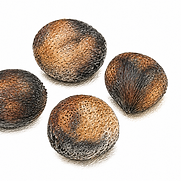
Roasted
Young oyster nut plants need protection while they are still small. Farmers should protect the seedling from animals and check regularly that the protection is still in place.

Cooked
As the oyster nut plant grows, the vine starts climbing the tree. Female flowers can develop into large pods. One pod can contain more than 125 seeds. When the pod is ripe, it naturally falls from the tree and can be collected.
This page is based on training material that was developed in partnership by Fiber Foods Group and Amref Health Africa, grounded in the knowledge and experience of smallholder farmers. Funded by RVO through the SFF programme.


Interested in the full training package?
The Fiber Foods training package has been developed for organizations committed to building responsible, sustainable, and inclusive agricultural value chains. It combines practical field experience with locally adapted training materials that support farmers, extension workers, suppliers, and processors.
The complete package is available to a limited number of partners whose objectives align with ours. If your organization is interested in implementing or adapting the programme, we would be pleased to discuss the possibilities.


